

Stay
Luxury Desert Camping in Jaisalmer: What to Expect
“Luxury desert camp” is one of the most used phrases in Jaisalmer travel, and one of the least defined. Some camps mean a hotel-grade room under canvas; others mean a few cushions and fairy lights. This guide sets realistic expectations so you know what comfort in the Thar actually looks like, and what to ask before you book.
What luxury means in the desert
In a city hotel, luxury is about space, service and finish. In the desert, the setting does half the work: silence, a huge sky, dunes turning gold at sunset. Luxury here is less about marble lobbies and more about removing the discomforts that usually come with sleeping outdoors. A good luxury camp gives you:
- A proper bed and a door that closes
- A private, clean washroom with hot water
- Good food you do not have to think about
- An evening that feels like hospitality rather than a performance for a crowd
- Staff who anticipate what you need before you ask
What it does not give you is a sealed, hotel-like environment. You will hear the wind on the canvas and see sand on the paths. Most guests find that part of the charm.
Inside the tent
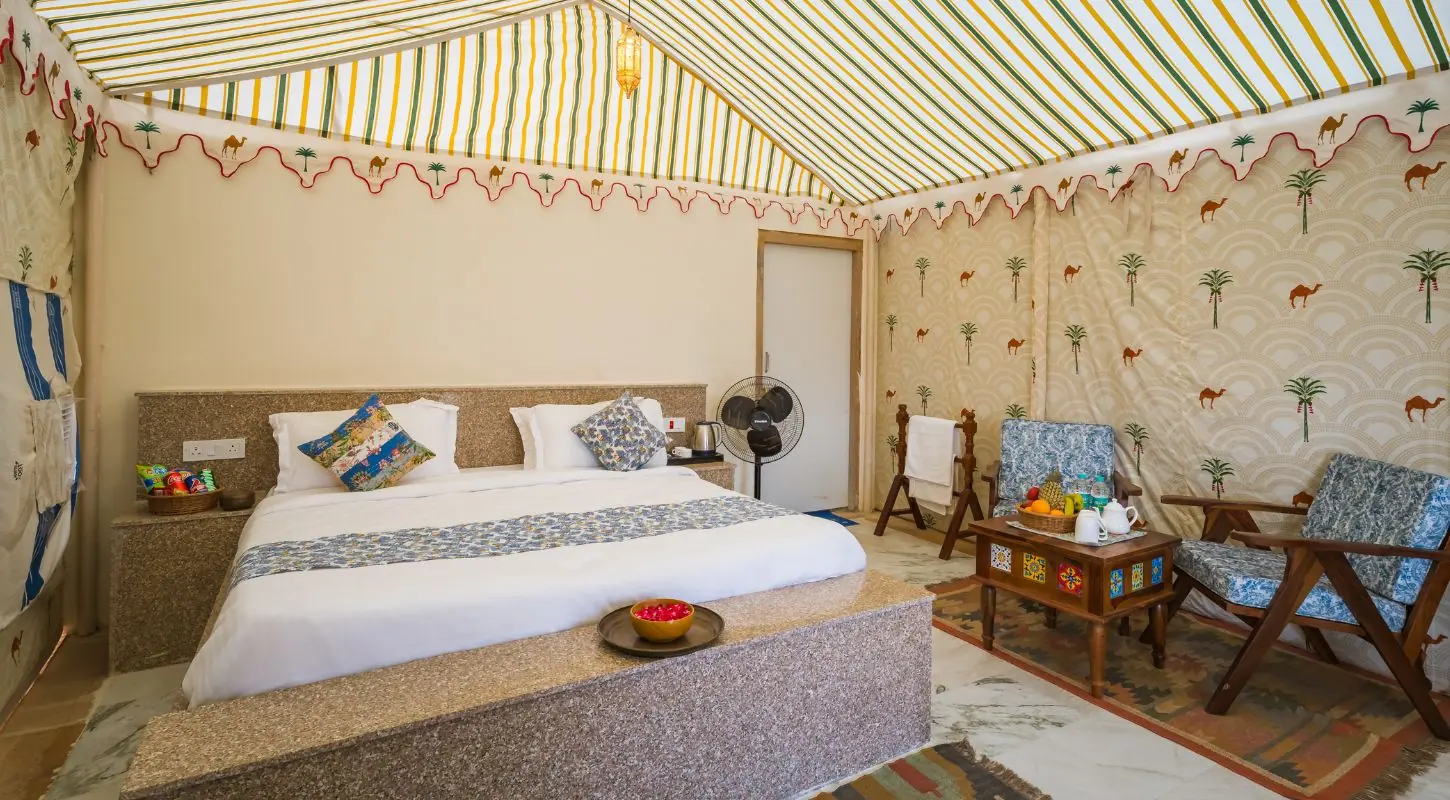
The Swiss tent is the standard for comfortable camps in Jaisalmer. It is a canvas structure with solid walls, a raised floor and a real door, closer to a cottage than a camping tent.
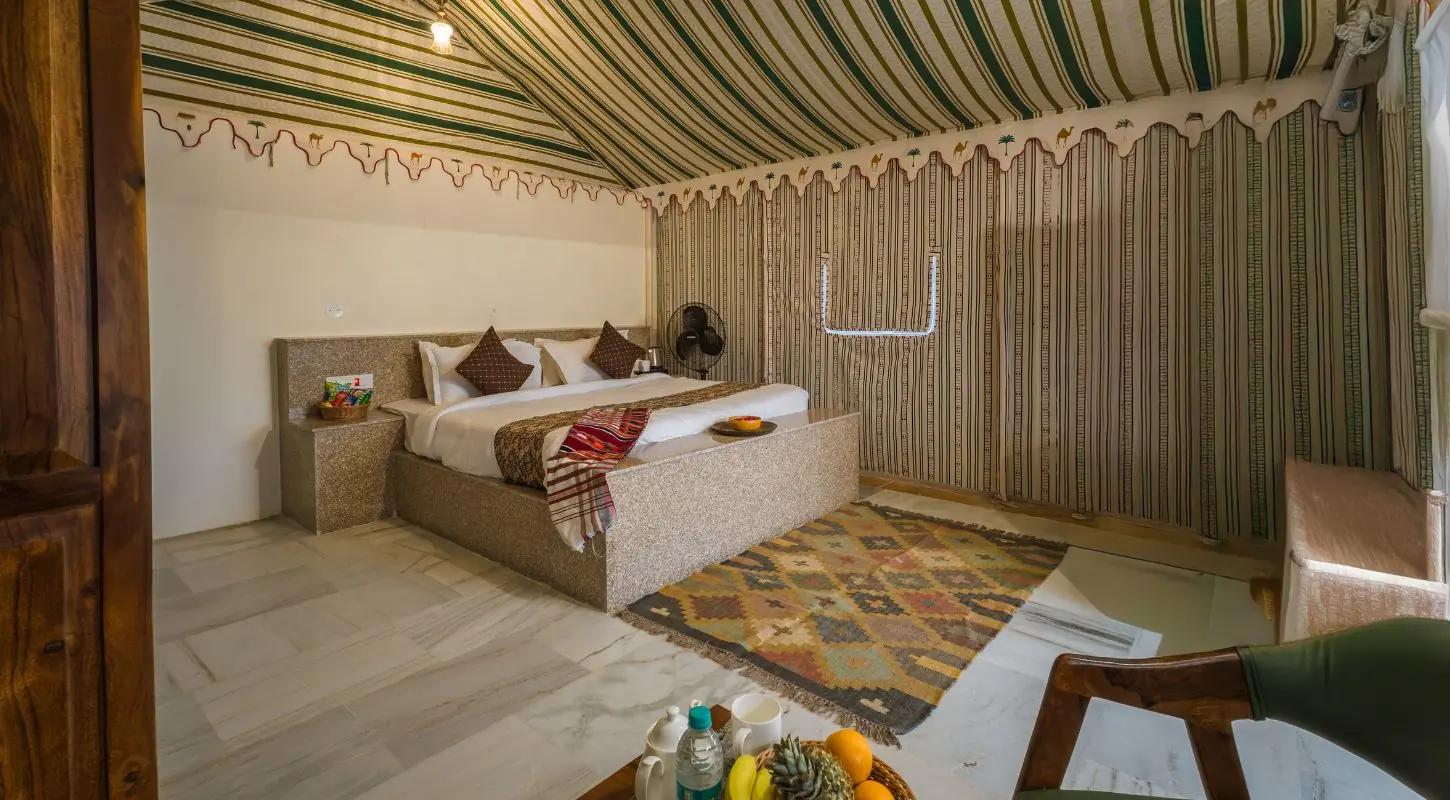
At Jaisan Heritage Desert Camp, the tents are intricately designed with sheer curtains and set around a large sandy courtyard, so light and shadow move across the camp through the day. Inside you will find a cosy king-size bed, seating and an attached washroom. Many guests spend their afternoon in an armchair on the verandah, watching the light change over the dunes.
When you compare camps, look past the canopy and the cushions. Ask about:
- Bed size and mattress. A king-size bed with a proper mattress makes the night.
- Floor. A raised, solid floor keeps sand and insects out far better than a mat on the ground.
- Lighting and charging points for phones and cameras.
- Extra bed. If you are three, check whether an extra bed fits comfortably; at our camp it does, at an extra-bed rate.
Washrooms
If there is one thing to check before booking any camp, it is the washroom. The difference between “attached bathroom” on a listing and a genuinely comfortable one is large.
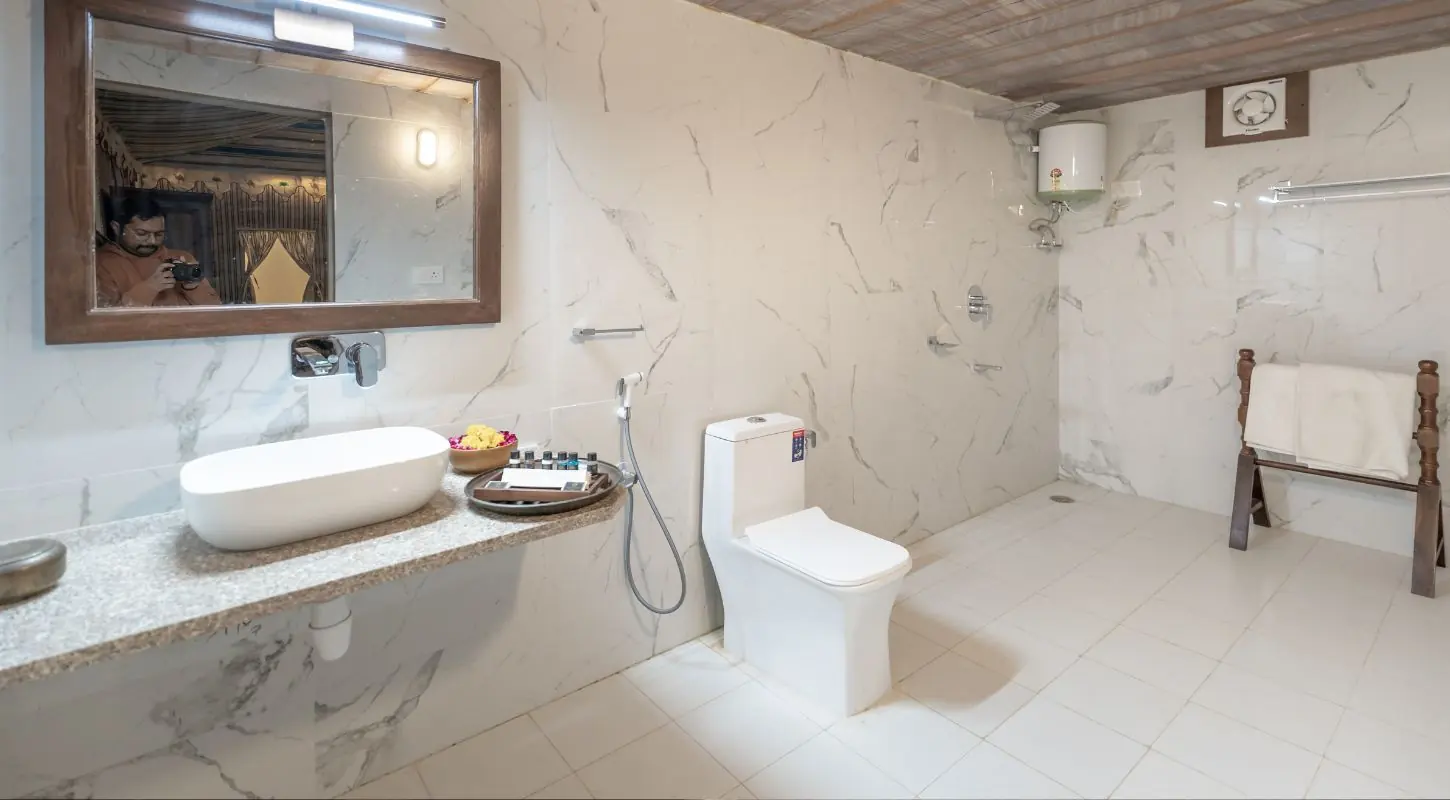
Our tents have attached, contemporary washrooms with toiletries provided and hot and cold water. You can see them in our photo gallery. Hot water matters more than people expect: from December to February, desert mornings can be cold, and a hot shower before breakfast is a real luxury.
Food and dining
Most camps serve dinner as a buffet after the evening programme, with breakfast the next morning. Rajasthani cooking is the natural choice in the desert: dishes such as dal baati churma, ker sangri and gatte ki sabzi are typical of the region, though menus vary by camp and season.

At our camp, dinner is a vegetarian Rajasthani buffet, breakfast is included, and tea or coffee is served in the evening and the next morning. For a special occasion, we can arrange a private candle-light dinner out on the dunes on request.
Evenings at the camp
The evening is where a camp shows its character. At ours, guests are greeted with the dhol and a tilak on arrival. After the sunset safari, folk artists perform Rajasthani music and dance in the courtyard, the campfire is lit and dinner follows. Those who want to keep going can join the DJ party, and those who prefer quiet can sit by the fire or walk out to see the stars.
Signs of a well-run evening: performers who engage with guests rather than rushing through a set, seating that lets everyone see, a fire that is tended, and dinner served while it is hot.
AC or non-AC?
This is the most common question we get. A simple rule of thumb:
- September, October and March: days can still be hot, and AC tents are worth considering.
- November to February: nights are cool to cold; a non-AC tent is comfortable for most guests, and you will want warm bedding rather than cooling.
Both options are on our tariff page, and our guide to the best time to visit Jaisalmer covers the weather month by month.
Who luxury desert camping suits
Couples and honeymooners
A private tent, a sunset ride and dinner under the stars is hard to beat for a special trip. If you are celebrating, tell the camp in advance. Small touches, like a quiet table or a private dinner on the dunes, are much easier to arrange with notice.
Families
Children usually love the camels, the music and the campfire. An extra bed in the tent keeps everyone together, and an attached washroom makes the night far easier with little ones. Bring a familiar snack and a warm layer for each child; desert evenings can surprise them.
Friends and groups
Groups tend to enjoy the livelier side of camp life: jeep safaris, ATV rides and the DJ party after dinner. Book several tents together so you are close to one another, and let the camp know your group size early, especially in peak season.
Who might prefer a hotel
If you need complete silence, a gym, or a fully sealed room, a city hotel may suit you better, perhaps combined with an evening visit to the dunes. For most travellers, though, one night under canvas is the highlight of their Jaisalmer trip.
What to pack
- Warm layers for the evening: a jacket or fleece in winter, a light layer in shoulder months
- Comfortable closed shoes for the dunes (sand gets very hot in the afternoon and cold at night)
- Sunglasses, sunscreen and a hat
- A light scarf or stole to keep sand off your face on windy days
- A power bank and a small torch
- Any medicines you need, as the nearest pharmacy is back in the city
Questions to ask before booking
A camp that answers these clearly and quickly is usually one worth booking:
- Can you send recent photos of the tent interior and washroom?
- Is the washroom attached, and is there hot water?
- Exactly what is included: which meals, which safari, which evening programme?
- Is the camp on the dunes, or do guests need to be driven to them?
- What is the rate for my dates, and is an extra bed possible?
- Which activities cost extra?
You are welcome to ask us any of these on our contact page or on WhatsApp.
Frequently asked questions
Is a luxury desert camp in Jaisalmer like a hotel?
It is closer to a comfortable cottage than to a hotel. You get a proper bed, a private washroom and full meals, but you are still under canvas in the desert, which is much of the appeal.
Do Swiss tents have attached washrooms?
At better camps, yes. Every tent at Jaisan Heritage Desert Camp has an attached, contemporary washroom with toiletries and hot and cold water.
Is an AC tent necessary?
Usually not between November and February, when nights are cool to cold. In September, October and March, an AC tent can make afternoons and nights more comfortable.
Is the food at the camp vegetarian?
At our camp, dinner is a vegetarian Rajasthani buffet and breakfast is included. Mention any dietary needs when you book.
Can you arrange a special dinner for an anniversary or proposal?
Yes, we can arrange a private candle-light dinner on the dunes on request. Ask us about availability and charges when you book.
Written by the team at Jaisan Heritage Desert Camp, Sam Sand Dunes, Jaisalmer. Facts about our own camp come from our current package; general travel information was checked at the time of writing, but timings, prices and regulations change, so please confirm before you travel.


